
HERE / SAY
Our space for reflection and dialogue—conversations with the artists, clients, thinkers, and creators who inspire our practice and shape our community.
nº 3- December 8th, 2025
There are writers who report on culture, and then there are writers who inhabit it. Marisa Meltzer, an author and journalist whose work centers the inner lives of women, does the latter. Her latest book, It Girl, looks beyond the myth of Jane Birkin to reveal the human story beneath the surface. In our next HERE/ SAY conversation, Marisa speaks openly about ambition, identity, the creative process, and the tension between being seen and being understood. It is an honest, reflective exchange, aligned with the way she thinks and works, both on and off the page.

CL: Your book title It Girl sums up how most people regard Jane Birkin. Your book really unpacks how layered and human that image truly was. When you began writing, what did “It Girl” mean to you, and did your understanding evolve as you explored her life and legacy?
Marisa: I always knew that being an it girl was both aspirational and a little flattening. I do not know if jealousy is the right word, but I was always envious of the kind of girls, or women, or whatever, who have been called it girls, because they are cool. There is something that you cannot quite put your finger on about them, and they are a little mysterious, and everyone wants them to be at their party.
I do not know if I am really like, I am definitely not mysterious. But also, you know, being reduced to a phrase like "it girl," and kind of it girls tend to be associated really closely with a time and place, which also means usually that you are considered a flash in the pan or kind of outdated after your moment has ended.
All of that is a little bit tragic, or just not what I wanted for myself. So I always knew that it girl was sort of a good thing and a bad thing, probably mostly a bad thing, because people do not proudly call themselves that. But I also used the title because it was a little bit of a raised eyebrow. It is like, here is what you think of this person, but I am going to tell you the truth.
CL: Birkin’s life sits between visibility and intimacy, adored as a muse yet deeply private in her own way.
What surprised you most about how she navigated being seen versus being known? And do you think that tension still defines modern womanhood?
Marisa: I do think that tension still defines modern womanhood, and I think it is probably harder to navigate than ever in the era of social media. Everyone has to decide what parts of their lives they reveal or not. And there are phones and videos everywhere.
I think in some ways what was really interesting about the story of Jane Birkin is that she had to navigate those things, about privacy and inner life versus public life, decades before most of us normal people had to do it. So I think there is something to take away from the book about how you can figure out that balance, and maybe that balance is ever changing. She certainly was very out and about for more than a decade, and she never became a total hermit. But there is a certain point in her life that swings a little bit more toward her family life and personal life and work life, rather than simply being famous for being in all the right places and wearing cute outfits.
But I also think she showed that there are moments when you want to be photographed, you want your name in the paper, you want to be seen on a red carpet or at a party, because it is good for your career or maybe it is just good for your morale that night. And there are times when you just want to blend into your neighborhood and walk your dog and go to a cafe. I like that she had both.

CL: Across your work, from Glossy to This Is Big, you return to women’s inner lives through the lens of culture, beauty, and ambition.
What draws you to these subjects, and do you feel that in writing about them you are also documenting parts of your own story?
Marisa: I think I am really drawn to women, probably because I am a woman. But I also think there are not as many people telling stories of interesting women or flawed women or women who were not princesses and queens. I take the work seriously of telling women’s history, but also through the lens of things that I am interested in, like culture and fashion and beauty and some business.
Basically, I think the through line is women who are indicative of a time and a place. I really like, as a writer, the challenge of recreating a very specific era. For This Is Big, it was Queens in the early sixties. For Glossy, it was SoHo in 2015 or something like that. For Jane Birkin, one of the cool things is that she was very much a part of swinging sixties London, and then she moved to France at the very end of the sixties and became totally representative of jet set, nightclub, 1970s Paris.
Not a lot of it girls do that. Not a lot of it girls transcend two very different scenes in two different countries. I love that about her.
Am I documenting parts of my own story? I think so. In This Is Big, it was not so much the subtext, because there was a lot of memoir in it. It was about me reckoning with my own history of dieting while also telling the story of Jean Nidetch, the founder of Weight Watchers. But with Glossy, it was also about telling the story of this specific era, the girl boss, and the rise of beauty and its prominence in business. That had been a big part of my career, and I was more of an observer or reporter around it, but it was definitely something I had a front seat to.
With It Girl, I think it was more about my own interests in the sixties and being someone who always loved Paris and contending with the idea of the muse versus the artist. I have always identified more with Serge Gainsbourg, or the genius, the artist in the relationship. It was never my personal desire to be the muse. I am not the type. For whatever reason, I do not think men write songs about me.
But I think I have this ambition to be the central person and to be considered a genius. So in some ways it was coming to terms with that ambition, but it was also about understanding that the muse plays an important role, and that they have never properly gotten their due. Taking a dive into one person’s psyche, especially someone like her, who had journals where you could see her desires, her frustrations, and how she wanted to be seen, was fascinating.
CL: Your writing feels personal and grounded, as if you are discovering your subject as you write rather than analyzing her from afar.
What does that process look like for you day to day? Are there moments that help you get into that creative headspace, or ways you find clarity when you are deep in a project?
Marisa: I always begin with a lot of research. Facts, as a nonfiction writer and reporter, are guideposts. I really love the research part of any project, and it is the most pleasurable. For something like this book on Jane Birkin, I was reading her diaries, watching her films, listening to her music, interviewing people who knew her, going to costume archives, going to her old homes, going to the cemeteries where she was buried, reading articles about her and interviews on TV and in print, and even doing things that were tangentially related, like seeing how Birkins get made at Hermès. I was trying to leave no stone unturned.
In that phase, I am not trying to overthink or analyze it too much. I am just trying to take notes on what I observe and any thoughts that I have. Then I turn to outlining the book and figuring out which parts go where and how the story is going to unfold. That part is really hard and exhausting and painful. I have to forget how hard it is after I finish a book, otherwise I am not sure I would write another.
I am pretty good at avoiding writer’s block, because I have outlines and notes and quotes, and I am not just staring at a blank page. I also go back over many drafts with editor notes. There is a lot of revising, and I am at peace with the fact that it will change a lot.
There are days when it is just not happening and I feel exhausted or not fully awake. On those days, I hope I can give myself permission to work on something else, take a nap, see a movie, or do a puzzle. Other days I do not have that luxury because of a deadline, and I have to push through. It is both.

CL: When life gets busy, small things like a facial, a walk, or even a slow, quiet morning can feel like reset moments. It could also be a martini and a Vogue. We would never judge and might even join you.
What does care look like for you right now? Are there simple things that help you feel present or centered when you are working on a big project?
Marisa: I wish I were better at having equilibrium during big projects, but instead things like cooking, which I do not like much anyway, or going to yoga, fall by the wayside because I am home working so much. Those things would help me, but they are the first things I give up.
I tend to be working long hours and using my head so much that I want rewards, which are often food, a cocktail, or a Vogue. I try to have at least one dinner with friends a week, something that feels really pleasurable.
I am an only child and I live alone, so I love alone time. A day of walking my dog and seeing a movie feels great. I also love bath houses and saunas. They feel so good and help me reset. Having vacations on the horizon, even far in the future, helps me too.
I wish I were less all or nothing. I wish I could be someone who exercises every morning no matter what or makes a salad for lunch every day no matter what. But I am so disciplined in my job that there have to be areas of my life where I am not disciplined. For me, that is shopping and eating. And yes, I love facials.
CL: You’ve become part of our Carrie Lindsey community, which means a lot to us.
How did you first find your way to the studio, and what do you most look forward to when you book your next appointment?
Marisa: I found my way to the studio because Carrie worked at Shen Beauty in Cobble Hill, or maybe Carroll Gardens, I forget which. I lived nearby and really liked her. Then she left, and I saw Lara Kaiser at Shen too, and she also left and joined Carrie Lindsey. I started going there for facials, brows, and lash tinting. I am very committed to my lash tinting. My brows do not need much because they are naturally very thin. Thank God thin brows are back in fashion, because I do not feel like a freak anymore.
I would also like to publicly thank Lara for telling me ten years ago not to get microblading because I would regret it. She was right.
I try to get facials as much as I can. I do not get them often enough, but I am trying to do it every three months. They make me happy. They feel good. I travel a lot, and my skin gets disgusting from planes, both clogged and dehydrated at the same time. I am always ready for a deep cleaning and hydration. I love the lymphatic work and the cheekbone sculpting.
Before big events and before my author photos, I always get a facial. My last author photo looks really good, and I had a facial that morning before the photos that afternoon. I look very sculpted. I love makeup, and I am fascinated by it, but I do not wear much. I just want beautiful, glowing skin courtesy of you guys.
CL: Jane Birkin seems like the ultimate person to have had the chance to write about, but we are wondering if you have a muse or person you have always wanted to write about or know more about , a dream subject, per se.
Marisa: There are people whose memoirs I would absolutely devour. I would love Chloë Sevigny to write a memoir. I would love Liza Minnelli’s. She reportedly has a book deal, and I hope she writes it because I will read it immediately. Same for Madonna. Same for Gwyneth Paltrow.
As for someone I would write about, it is not always the person I am the biggest fan of. It is someone I find fascinating. I am really interested in American designers from the twentieth century, like Calvin Klein and Donna Karan.
I do not know what my next book will be about. I am trying to let my mind rest and not pressure myself into finding a new idea. Sometimes you have to stop actively trying in order to come up with one. Those are the kinds of people whose memoirs I want to read. If Courtney Love ever publishes her memoir, I will be first in line.
CL: So, what’s next?
Marisa: That is also part of my answer to what is next. I am trying not to be desperate to define what is next. I started a job as senior staff writer at Vanity Fair, and that is my next adventure.
It has been quite a year, full of highs and lows. I am hoping to return to a little more balance in the next couple of years. We will see!


nº 2- October 16, 2025
Meet Susanne Manasi, founder and creative force behind (M)ANASI 7. A makeup artist by training and visionary by nature, Susanne approaches beauty as a form of design — where color, texture, and consciousness intertwine. Rooted in her Swedish heritage and inspired by the natural world, she creates products that feel both artful and alive: modern formulations that honor craft, integrity, and imagination in equal measure.
We met Susanne Manasi at her Stockholm studio, where her world of creation unfolds in color, texture, and quiet intention. As the founder of (M)ANASI 7, she approaches beauty as both craft and consciousness—each shade a brushstroke of imagination, each product a reflection of integrity. Fresh from her BOF Global Award for Creative Execution, Susanne speaks about artistry, sustainability, and the imaginative process behind her timeless formulations.
CL: We instantly fell in love with (M)ANASI 7 the first time we played with its colors and textures , there’s something so artful yet effortless about the way they come to life on skin. Seeing our clients embrace the brand with the same excitement has been incredibly rewarding. And now, with your recent Creative Execution award win at the BOF Global Awards, it feels like the rest of the beauty world is catching on too. Beyond the recognition, what did this moment mean to you personally, and what did it affirm about your creative approach?
Susanne: Thank you so much. The experience was truly incredible, and I still find it hard to fully take in. This achievement represents one of the most significant milestones for us so far, and it is something we are deeply proud of. What makes it even more meaningful is that it also shines a light on the remarkable work of my partner, Olof, our Art Director. He has dedicated countless hours to shaping our visual identity—overseeing everything from packaging design to photoshoots and the overall creative direction. His talent and
commitment have been instrumental in bringing our vision to life, and I’m delighted that his efforts are receiving the recognition they so richly deserve.
CL: The award celebrates originality, storytelling, and vision in beauty. In your own words, what does ‘creative execution’ mean, and how does (M)ANASI 7 bring that to life, from product innovation to brand imagery?
Susanne: For us, creativity is not only the artistic side—the design, aesthetics, and overall visual expression—but also the ability to find smart, practical solutions that allow a smaller business like ours to bring ambitious ideas to life. Working with limited resources often presents challenges, but it also encourages us to think in innovative
ways and approach projects with a problem-solving mindset. In many cases, it’s about finding alternative paths to achieve results that might typically require much larger budgets, without ever compromising on quality or vision.
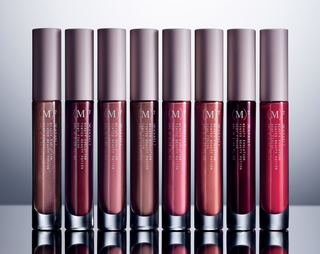
CL: Your colors and textures were what first drew us in, along with your incredible sustainability achievements, like creating biodegradable products, as well as your beautiful imagery and branding. When you’re dreaming up a new shade, do you see yourself more as a makeup artist, a painter, or even a storyteller? And can you walk us through your process, from that first spark of inspiration, whether it’s a color found in nature or a texture you’ve been envisioning, to developing the product and finally seeing it on the shelf?
Susanne: I often rely on my intuition, and much of my inspiration is drawn directly from nature. A single detail—such as the unique color combination on a bird or the texture of a leaf—can spark new ideas. For example, the “Eye Glow” shade Ochaya was inspired by a natural colour palette I observed in the wild on a bird. These organic, harmonious tones are usually what set my creative process in motion.
When it comes to product formulations, I carry countless ideas in my mind, each with the potential to become something meaningful. The challenge, however, lies in the fact that I cannot pursue them all at once. Every concept requires careful development—finding the right ingredients, designing the packaging, and ensuring the product delivers the intended effect. It is a process that takes time, but one that I deeply value because it allows each creation to fully take shape in a thoughtful and authentic way.


CL: For you, sustainability isn’t just an ethical choice, it’s a creative one. How does working with sustainable materials and processes shape, challenge, or even inspire your product development?
Susanne: I have to admit, it is often quite a challenge, but when we manage to find the right solution, it feels like a true achievement that we are very proud of. At the moment, we are developing something new, and one of our key priorities is to minimize the use of virgin plastic as much as possible.
The difficulty lies in the fact that the most functional option for this particular product would typically be plastic. However, post-consumer recycled (PCR) plastic comes with its own challenges, such as very high minimum order quantities and certain design limitations, especially when it comes to colors and finishes. Glass, on the other hand, often requires a pump mechanism (for the development we are currently working on), which is usually made of plastic or a non-monomaterial combination, making it difficult, if not impossible, to recycle properly. Aluminium presents another option, but it is not always compatible with direct contact with the formula, and in many cases it also requires additional materials, which again prevents full recyclability.
Balancing functionality, aesthetics, and sustainability is never simple, but it is a responsibility we take seriously. Each choice involves trade-offs, and our goal is always to find the best possible balance between performance, design, and environmental impact.
CL: (M)ANASI 7 occupies this rare space- independent, unmistakably luxurious, and with sustainability at its core. Where do you see indie sustainable luxury beauty heading, and how do you hope to help shape that conversation?
Susanne: I truly believe this represents the future of beauty. The industry can no longer continue down the path of mass consumption and overproduction. Too often, brands are acquired by large conglomerates, which ultimately results in just a handful of corporations owning the majority of the market. My philosophy is rooted in “less is more”: focusing on higher quality, thoughtful creation, and personalization rather than endless quantity.
That is why I am especially proud to be partnering with Carrie Lindsey Beauty. Your ethos is completely aligned with ours- centered on quality, genuine personal connection, and a deep commitment to your community. You have built a strong and loyal customer base that truly understands and values this approach, which makes the collaboration both meaningful and exciting.


CL: Without giving too much away, are there any new plans or products in the works for this year that we should keep an eye out for?
Susanne: This fall, we’re introducing beautiful new shades of the Tinted Beauty Potion, along with two Holiday Limited Edition sets that I’ve personally curated with the most loved color combinations.
And looking ahead to 2026, I’m happy to share that I’m working on some truly exciting projects—including one or two completely new products that I can’t wait to tell you more about when closer to finalizing.
CL: If you could share one beauty philosophy or practice with everyone who uses your products, what would it be, and why?
Susanne: I would encourage you to explore and experiment with confidence. In beauty, there are no strict rules—only what makes you feel your best and most comfortable for each occasion.


nº 1 - July 5, 2025
Chelsea Leyland on Endometriosis, Epilepsy & Founding Looni
Meet Chelsea Leyland—DJ, activist, and co-founder of Looni, a menstrual wellness brand born from her personal journey with epilepsy and endometriosis. After years of navigating hormonal health with few real solutions, Chelsea set out to change the narrative, with science-backed support, holistic tools, and a whole lot of honesty.
We caught up with her to talk about the gaps in women’s health, the power of plant medicine, and how Looni is supporting everything from mood swings to hormonal imbalance.
CL: Looni was born from your personal journey with menstrual pain—what moment made you realize this needed to become a brand?
Chelsea: Looni was born from a long and colorful journey of healing—a true culmination of mine and my co-founder Tatiana’s experiences with our cycle, my endometriosis, and ultimately, my passions.
But if there was one defining aha moment, it was realizing that every conventional solution I’d been offered—surgery, synthetic hormones, antibiotics, painkillers—had ultimately failed me.
By becoming my own best advocate and committing deeply to feeling well again, I found tremendous relief from the pain. I cleared my skin naturally and discovered the profound power of botanicals, the healing force of community, and a range of transformative tools: nutrition, acupuncture, mindfulness, cycle syncing, trauma work, and more.
That’s when it became clear to me: women are entering puberty with a profound deficit in body knowledge—particularly when it comes to our hormones—and that needs to change. Body literacy can be taught—and it should be. That truth became the heartbeat of Looni.
CL: How did your experience with epilepsy and hormonal health shape the vision for Looni?
Chelsea: My endometriosis journey taught me that healing isn’t linear and that there’s no one-size-fits-all solution. True healing must be holistic—focused on root causes, not just symptoms, as is so often the case in Western medicine.
My experience with epilepsy laid the foundation for my deep respect for plant medicine and nature’s ability to work in harmony with our bodies to restore balance. I’ve been seizure-free for almost a decade thanks to phytocannabinoids—molecules derived from the cannabis plant—which profoundly shaped my belief in the body’s innate capacity to heal when supported in the right way.
These two journeys deeply informed the vision for Looni: a brand rooted in body literacy, natural support, and a radically integrative approach to hormonal health.


CL: Looni’s supplements are plant-derived and developed with board-certified physicians. Can you walk us through that collaboration process?
Chelsea: From the beginning, we knew we didn’t want to create formulas based on buzzy ingredient trends—or rely solely on personal experience. So we started by conducting extensive consumer research, which revealed something surprising: while we assumed menstrual pain would be the most prevalent concern, the overwhelming pain point shared by hundreds of women was actually low mood.
That insight helped shape our direction. Our goal was to blend evidence-based medicine with holistic, integrative care—which meant collaborating with a diverse group of medical experts. We worked closely with board-certified OB-GYNs, including one who also held certification in integrative medicine (a rare and powerful combination), a reproductive-focused functional medicine practitioner, and a female urologist.
We wanted to approach hormonal health from multiple angles—to reflect the complexity of our bodies and experiences. That multidisciplinary lens became foundational to how we formulated our supplement and how we continue to build the Looni product line.
Our hormonal support supplement Balance Beam—reflects the strength of clinical insight, integrative wisdom, and a deep commitment to supporting hormonal health with integrity.

CL: Looni was created with menstrual and hormonal health in mind—but do you see it also offering support for people navigating perimenopause?
Chelsea: While we don’t specifically market Balance Beam for menopause symptoms, we’ve seen many women in perimenopause using it and finding meaningful support. Several ingredients in the formula offer benefits that align with some of the common challenges during this transition. Ashwagandha, for example, is an adaptogen traditionally used to help the body manage stress and promote overall well-being, including better sleep quality. L-theanine, an amino acid derived from green tea, is known for supporting relaxation and calm without causing drowsiness, which can be incredibly helpful when navigating hormonal shifts. And 5-HTP, a precursor to serotonin, may help regulate mood and support more consistent sleep patterns. So while it wasn’t designed specifically for perimenopause, the formulation naturally supports many of the symptoms people experience during this time.
CL: I know Looni has an online community that benefits women at different stages of their hormonal life cycle. Can you tell us a little more about it?
Chelsea: Yes—I started the community after experiencing a long and painful struggle with fertility due to endometriosis, which resulted in multiple pregnancy losses and an ectopic pregnancy. While going through this incredibly challenging time, I felt a deep desire to connect with other women who understood what I was facing and could make me feel seen.
In a world where you can’t easily filter out endless baby announcement posts or targeted ads for baby products on social media, I saw the need for a dedicated space where women facing these challenges could truly support one another. and thus bring about healing.
From there, this incredible community grew into a space with hundreds of women looking for support and a way to crowdsource information from others they trust. We now have dedicated groups for pregnancy and mums, those trying to conceive, pregnancy loss, and chronic conditions like endometriosis, PMDD, PCOS, and more.
